
Writer Toolbox: Iterative Drafting, Part I
writing a novel with intention

Richard III got me thinking about iterative drafting.
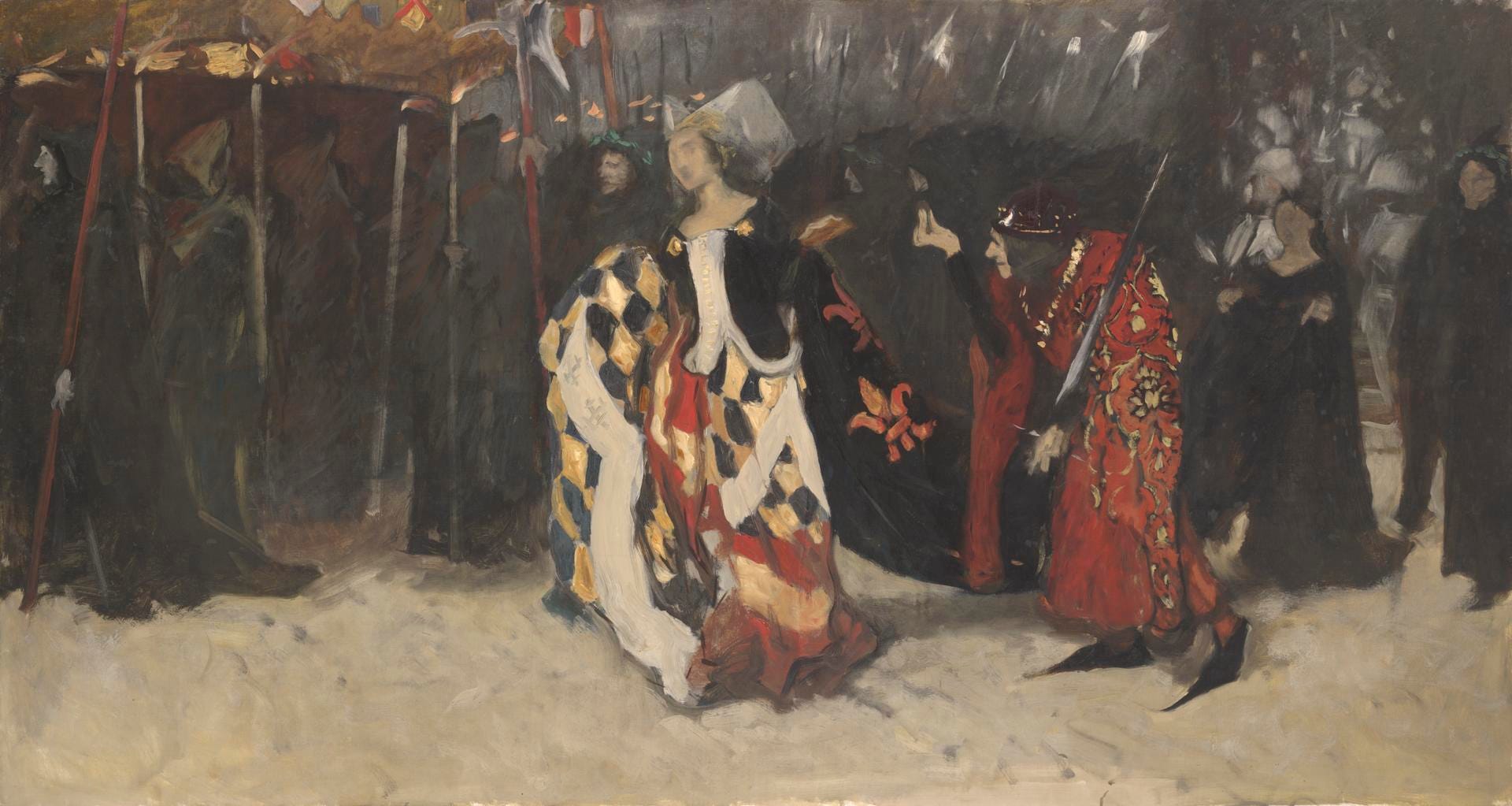
You know the one. According to Shakespeare: Schemey. Murdery. Hunchbacky. But it wasn’t the play itself that got me thinking, at least not directly. It was Edwin Austin Abbey’s depiction of one of the scenes.
Here we see our little guy whispering poison to the Lady Anne. He killed her husband and family, but, concept: has she considered marrying him?
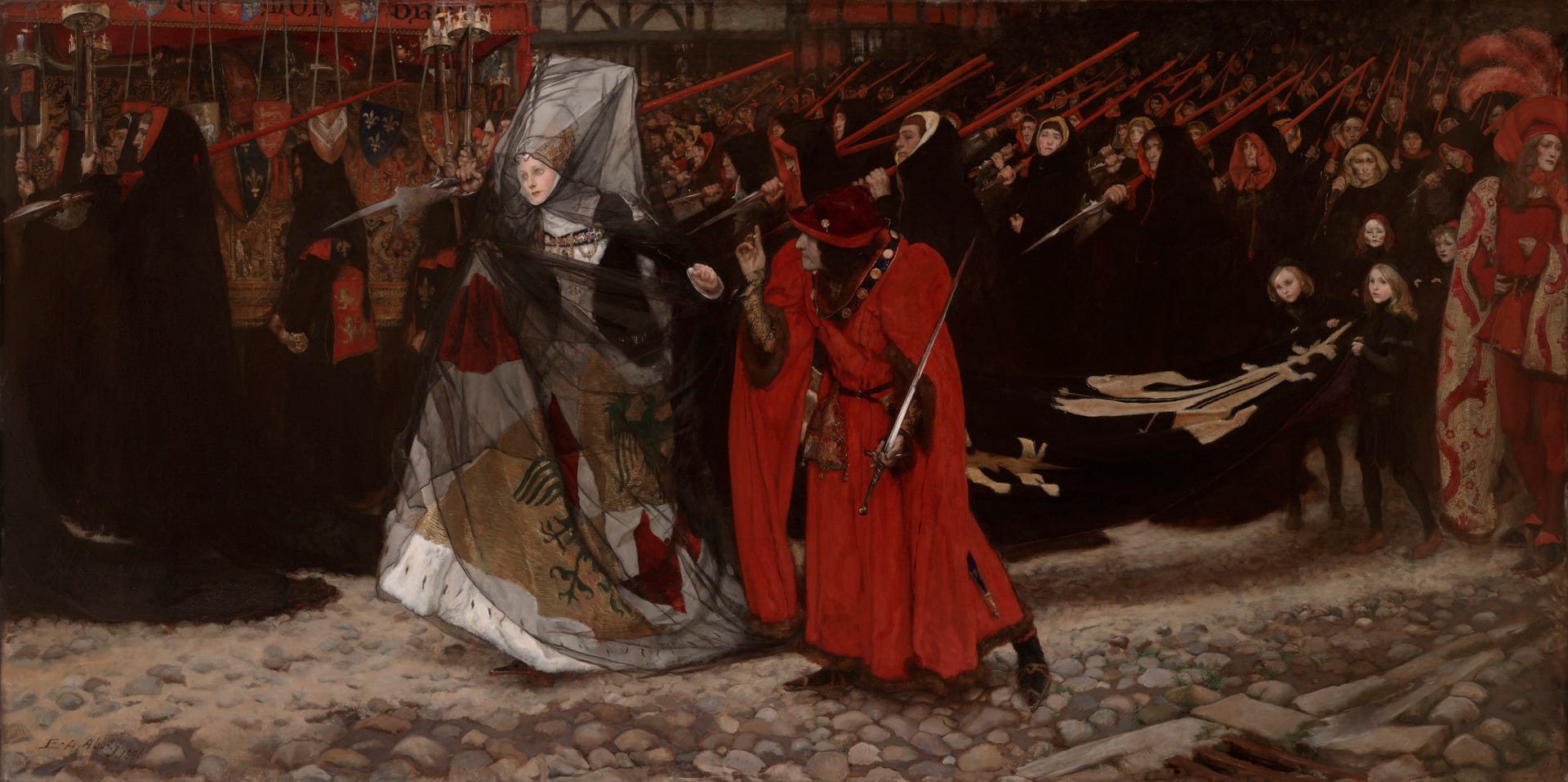
Edwin Austin Abbey was a contemporary and friend of my old pal John Singer Sargent; this painting represents Austin coming into his own (it is another post all its own to compare his early successful work with his mature successful style).

It netted him a position as an Associate of the Royal Academy, which was limited to only a few dozen artists. Of course it did! Look at the control. The restrained palette, mood, gesture.
Punch reviewed it at the time: “This is the picture of the year. Most certainly it is the Abbeyest of ‘Abbey Thoughts’.” (I love this review. I would like this to be the review of my ‘27 novel. The Stiefvateriest of Stiefvater Thoughts).
Now, I was fetching an image to post alongside my dachshund spoof drawing:


And as I was rummaging through the Internet for the image, I uncovered Yale University Art Gallery’s collection of Edwin Austin Abbey’s progress works for the piece.
I was delighted. They are a beautifully visual example of how complex, sophisticated works require iterative drafting. Let’s take a look.
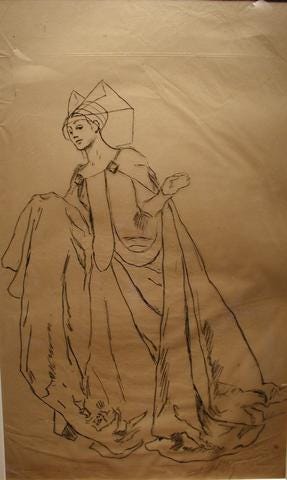
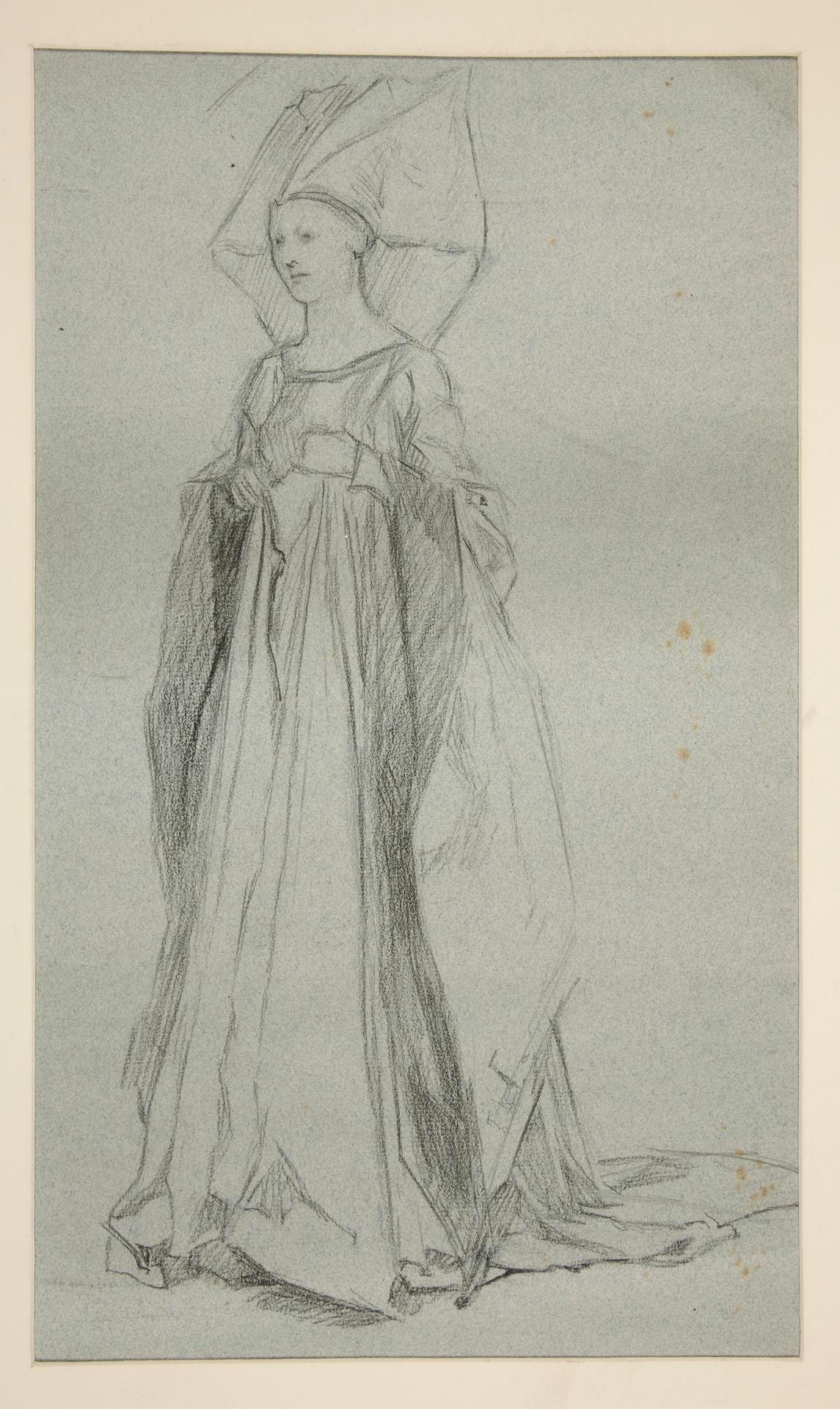
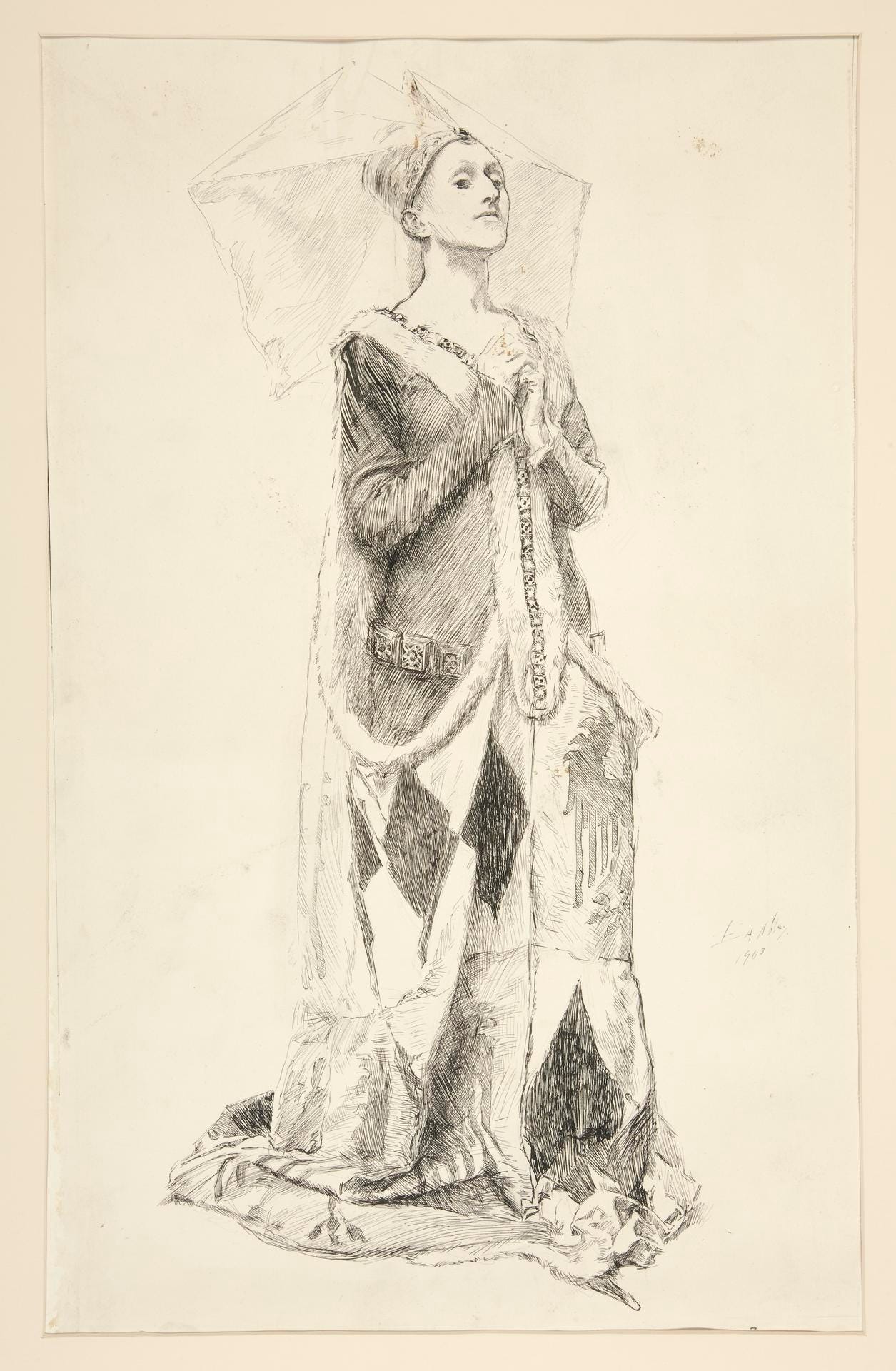
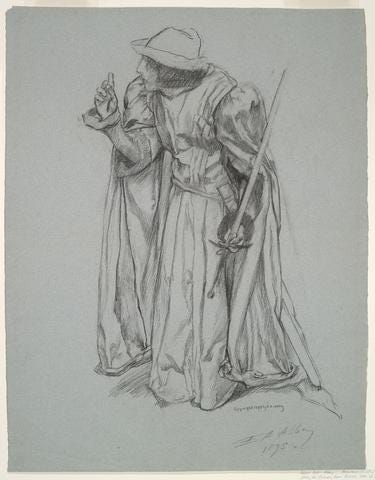
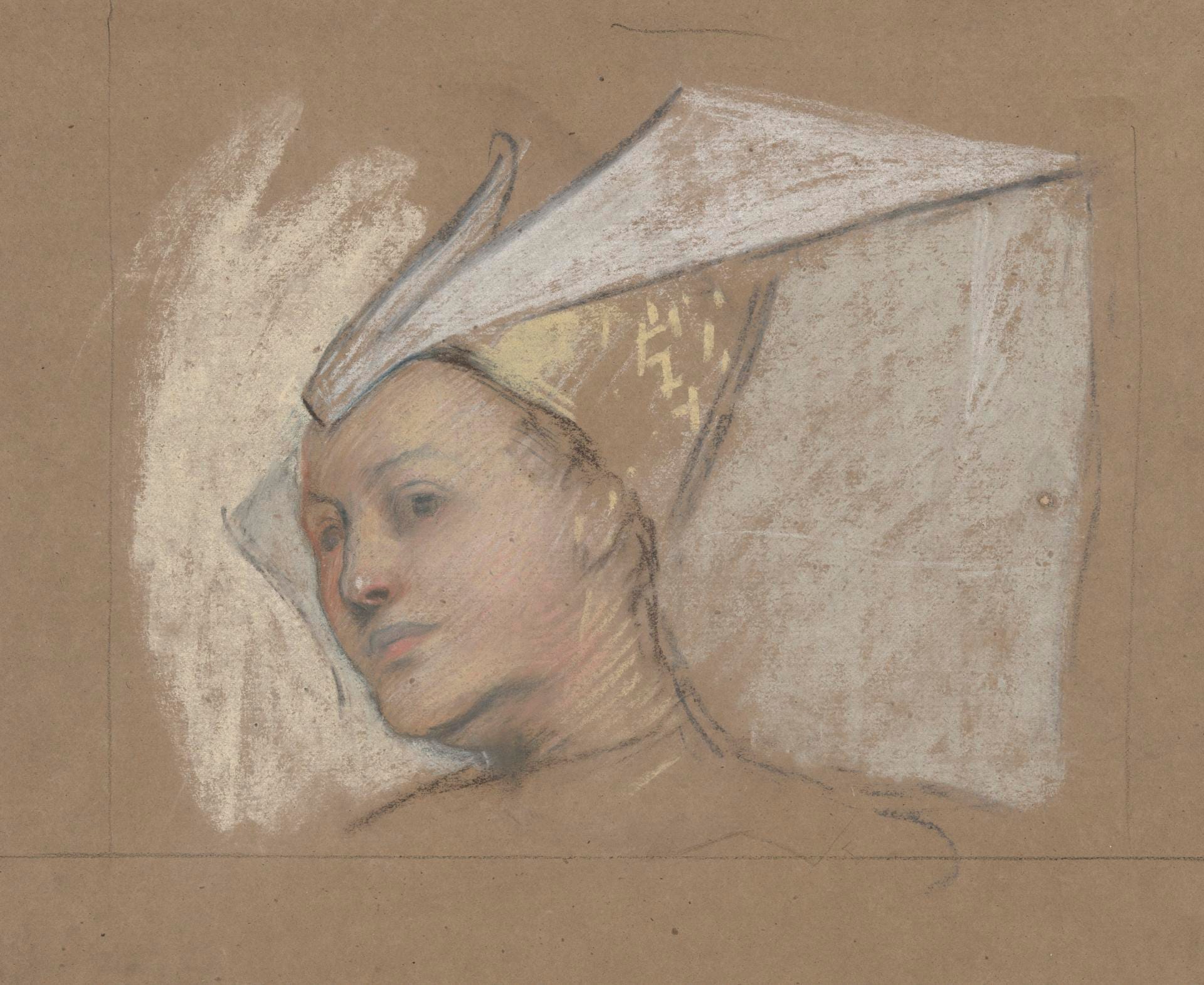
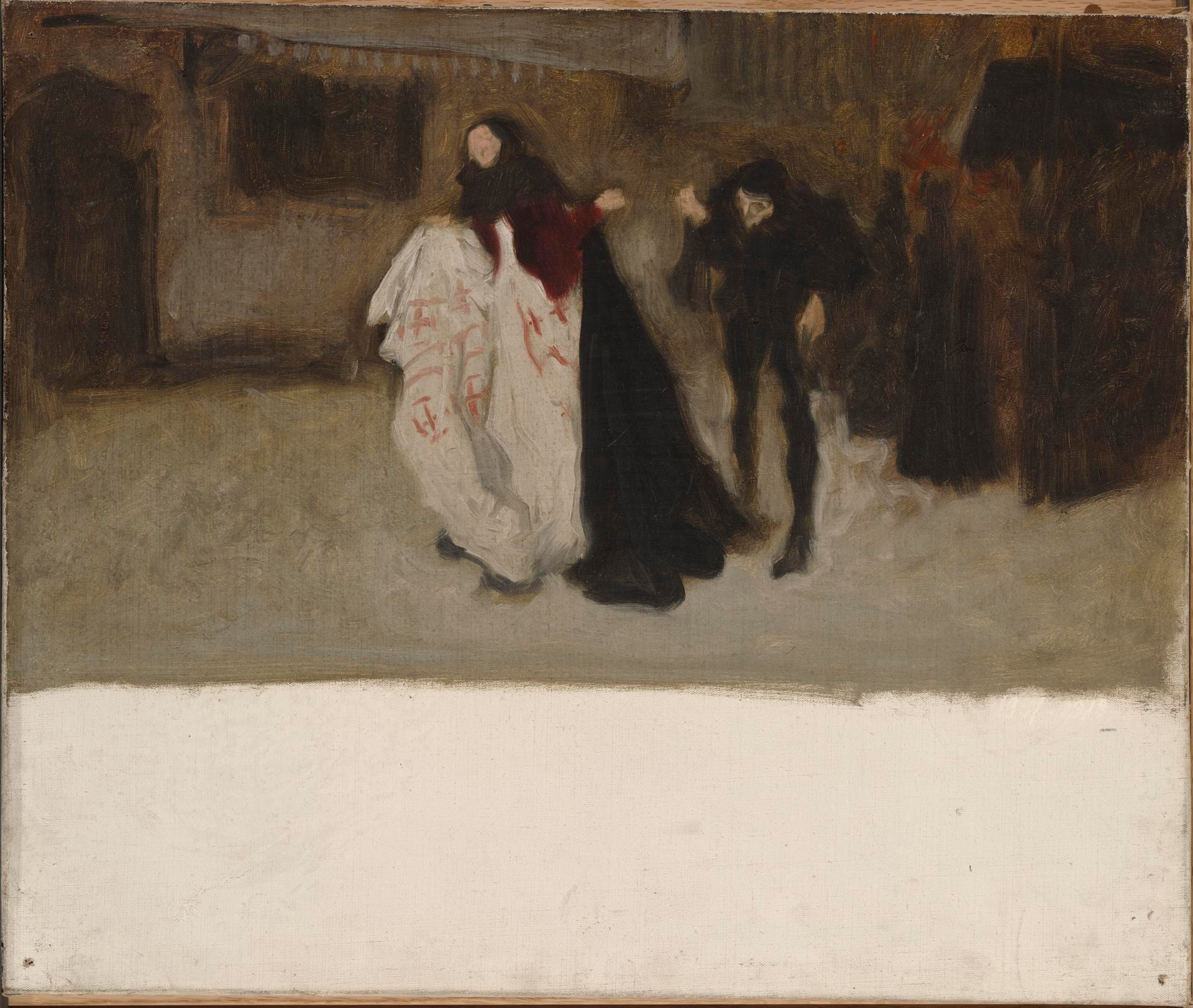
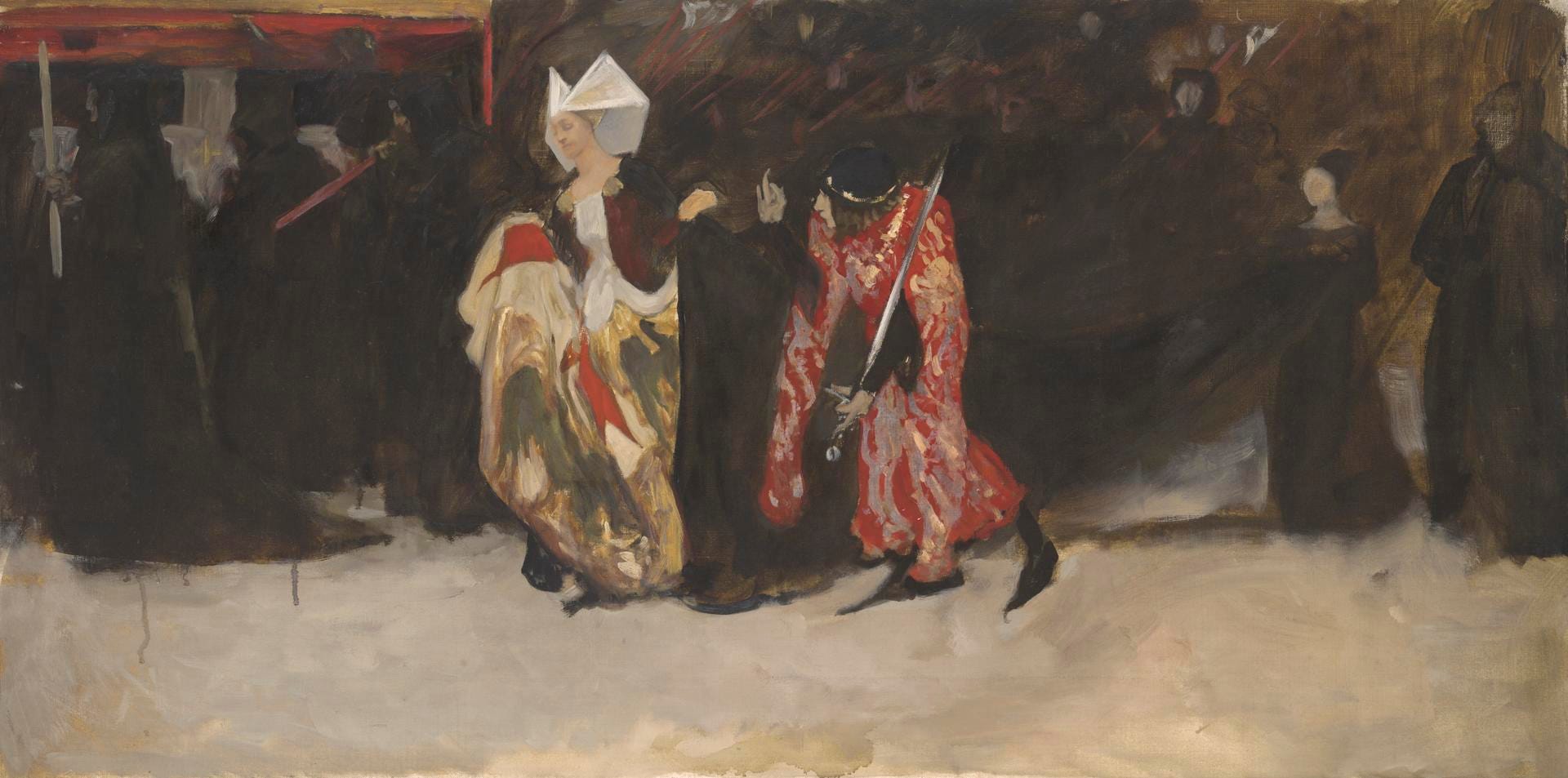
If you search through the Yale gallery’s results for “Abbey” and “Study,” you can see that his iterative work outnumbers his finished pieces by hundreds.
(there are also some examples of silliness, which I like)


What do I mean by iterative work? I mean deliberately repetitive discreet pieces performed with full awareness of their 1) problem-solving purpose and 2) their disposability.
Abbey knew he had a lot of creative questions to answer and, as a mature artist, he knew better than to do this work on the final canvas. He tried out color, tone, and gesture in quicker, disposable formats instead. These practice pieces gave him the creative information he needed to then do the work on the final piece, which was still an iterative work—he hated the model John Singer Sargent sent down for him, and scraped her face off; he had to change the widow’s clothing multiple times; he painted the halberds wrong way round for mourning.
This is novel-writing.
It’s harder to think about written words this way; easier to see it in images. We can look right at what Abbey is solving for; we can understand that big questions like ‘how should Lady Jane be standing’ are more easily and quickly done on scratch paper. We can even see more complex ideas, like how the color palette and tone can be investigated fairly independently in standalone practice pieces.
In novel-writing, there is a tendency to think that you sit down and draft from beginning to end, and then you go back and edit to make it “better.” This is not only a waste of time, it’s a barrier to cool, sophisticated work. You’re investing so much time in work that will need to be overwritten, and you’re confusing your own sense of purpose by trying to get to “the end” under false pretenses!
Let’s use the metaphor: Imagine that you’d painted Lady Anne in the wrong pose; you’d need to edit everything else on that canvas once you solved for her. Not only that, but you might be so attached to the work you’d done all around her, trying to justify her wrong pose, that it breaks your heart to change one thing or the other. “Kill your darlings,” says the writing advice. This is easier, I assure you, if the darlings were lightly penciled in, rather than worked on in full color for years.
Now, I’ve been howling about pre-work and iterative work in novel-writing for a long time (buy my 8 hour video seminar here, she said, crassly), but I think Abbey’s progress drawings do a very neat job of visually showing what I mean. When I say that my latest novel went through 11 drafts, this is what I’m talking about. I’m not trying to hit Fully Finished Work until I get very far along in the process. Drafts 1-9 are all eyes-wide-open problem solving. And my outtakes file, with its 250,000 words of deleted stuff? Very little of it is exciting chapters featuring axed action sequences readers would love to see. It’s iterative stuff; me problem-solving my way through various setting, character, and tone questions. The same chapter or conversation sliced 11 ways, with increasing sophistication as I get closer and closer to what I imagined for the novel.
Okay, enough metaphor. Next week, I’m going to try to find some of my written work that demonstrates this problem-solving. Until then, have fun with your scratch paper.
Extras
• I’m listening: “The Goose and the Commons,” by Small Fools (a reader recommendation), and “Stargazer” by Asbørn.
• I’m reading: Existential Physics, by Sabine Hossenfelder.
• I’m watching: Grizzly Man, a documentary by Werner Herzog that I really should have read anything about before sitting down to on a rainy evening with Lover.
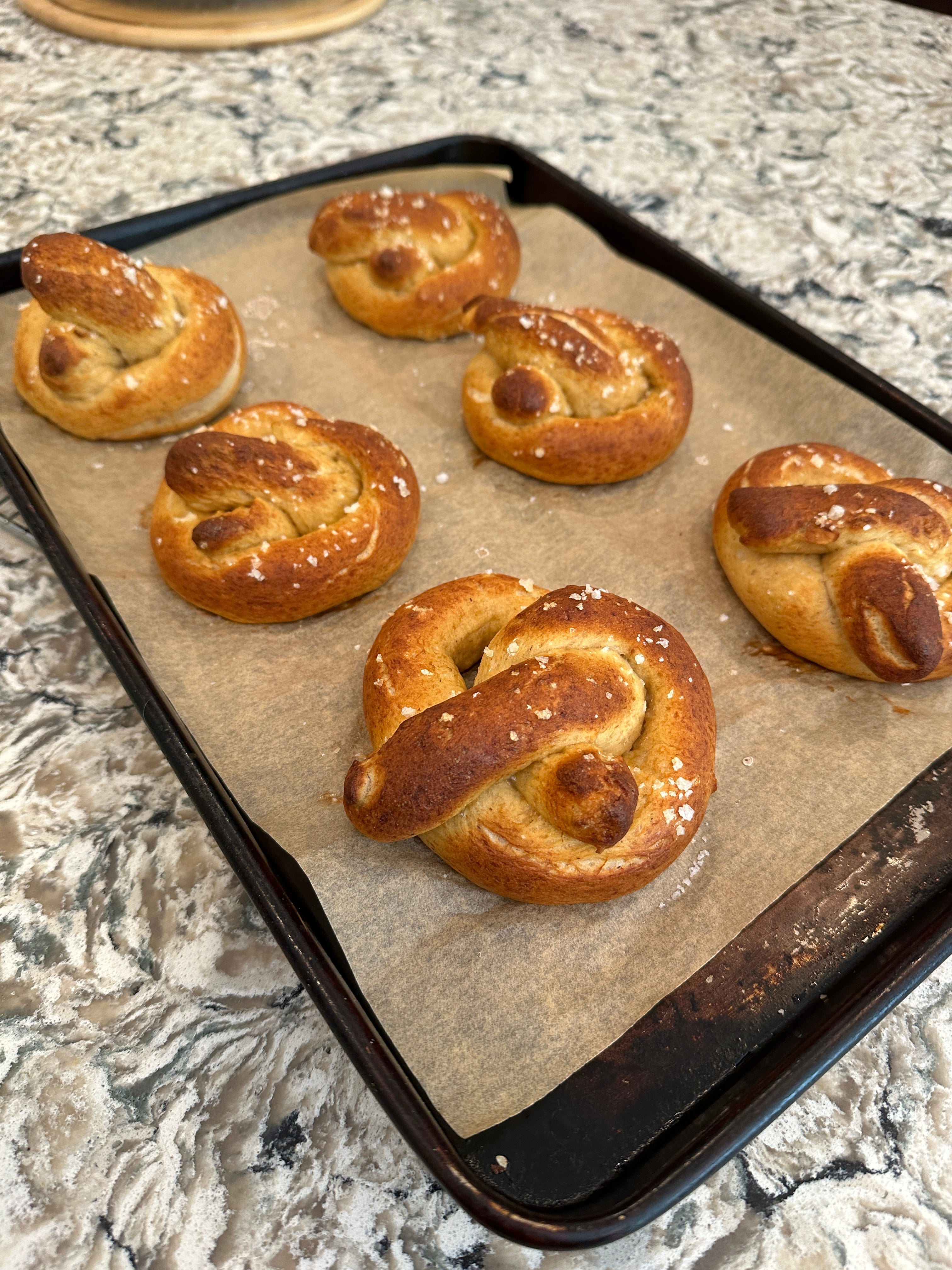
• I’m doing: making gluten-free pretzels and starting a gluten-free sourdough starter so that I can work my way through THE ART OF GLUTEN FREE BREAD by Aran Goyoaga. I made it to day two before I had to call Lover and say piteously “I forgot to feed the starter before I got in the car, would you?”
This is a timely and reassuring post for where I’m at right now, having just decided to toss the past year’s worth of work on a new(-ish) project into the compost heap because what I’d written wasn’t turning out to be a Teddy Book. It both stings and excites me to have made that choice.
If you’re willing to touch on this, for your next post I’d be interested in hearing how you keep your iterative process purposeful and prioritised, especially in the early stages when you’re still testing out the broader strokes of a concept to decide what actually works on paper.
Needed exactly this today. Thank you!