
Good Practice
Build your own mousetrap, I guess

In this post, I’m going to answer a question from the comments of my previous post, Bad Practice, but first, I’d like to brag about being pointlessly psychic.
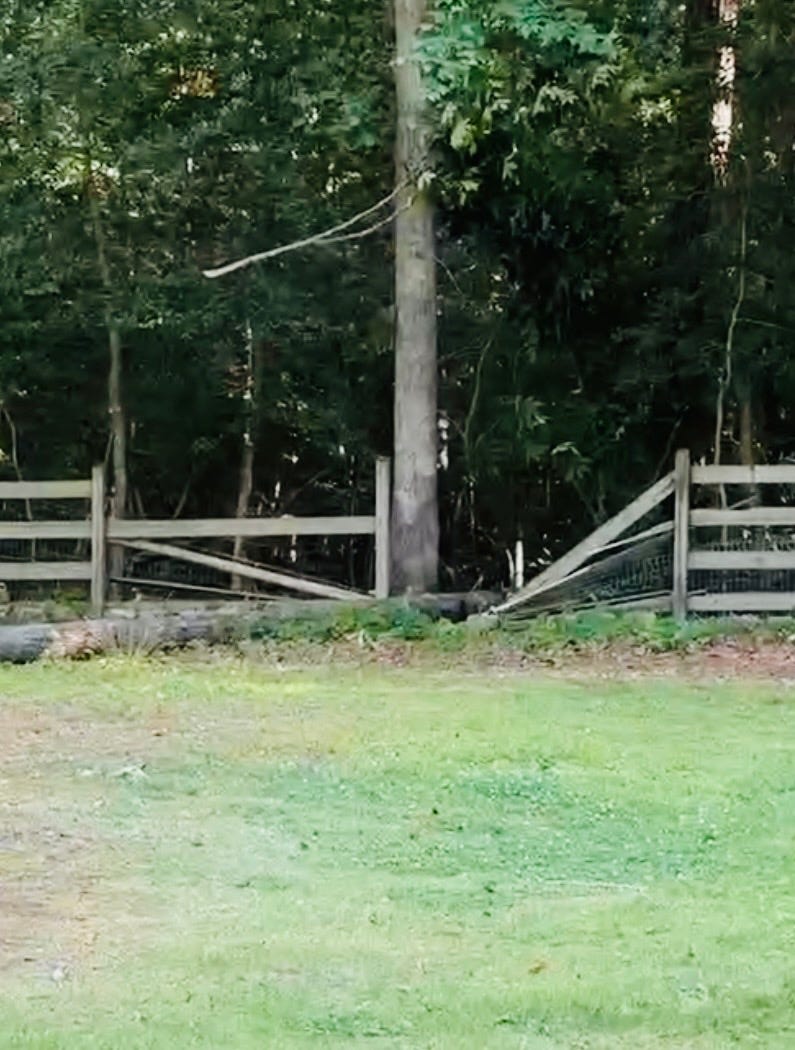
Recently, Lover went on a brief out-of-town trip, and when he called to see if I’d become a feral woodland sprite yet, I said, “I think that asshole’s going down.”
Lover = my husband
Asshole = large tree that began to tip last year and has, for many months, been leaning gently
Feral woodland sprite = me
Lover said, “I think the tree guy is coming next week. It’s not going anywhere before I get back.”
I hung up. I placed my fingers on my keyboard to work. I felt pensive. A moment, later, a sound like a door slam came from somewhere outside. The dogs went wild. Mm, I thought.
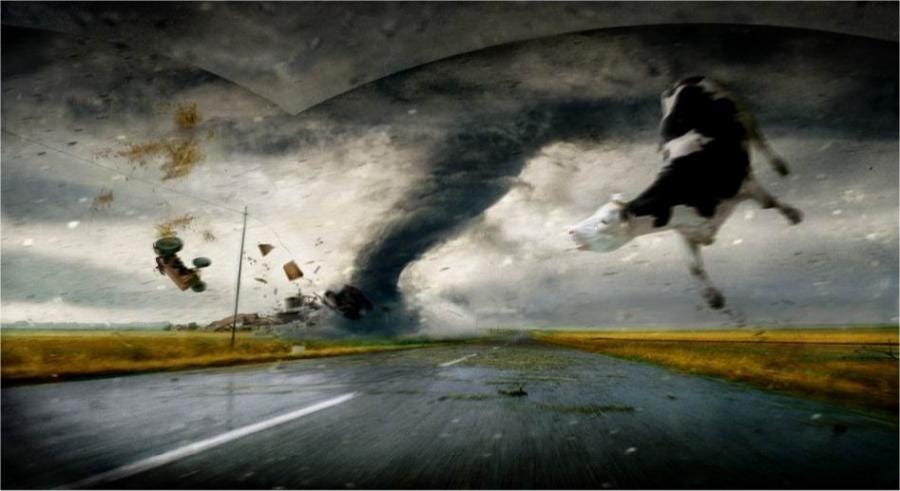
Pointlessly. Psychic. In Twister, we all saw how a tornado warning is meaningless if it is given too close to the actual tornado’s appearance.
It is worth noting, I suppose, that this is the same section of woods that ate my son. Odd rainfall patterns and a generational curse have really taken a toll on the tree roots in this area; they keep rotting and then giving up.
This anecdote has absolutely nothing to do with what I’m going to say next, which is all about learning. I have learned nothing.


Onto the question.
Kaeleena11 asked: “Once you isolate something that needs practice [in novel-writing], how do you go about doing it? I’ve been here long enough to know that the first part of your answer is ‘I read a lot of books that do it well’. But if the aspect you’re practicing is something that’s slow-build (say, mood or character), how do you pinpoint the parts doing that work in these novels? And then, how would you practice it?”
Very confidently, I told Kaeleena that I thought this was a great question that I’d answer it in a post all its own. I didn’t realize it was one of those foods that gets larger the longer you chew it. I started this post; deleted it; started it; deleted it.
In the meantime, I heard two quotes that stuck with me (as part of my continued Trying to Be a Better Listener plan).
The first quote:
“I was forty-seven years old before I did anything that people would really look at twice.”
—Janet Rowley, MD, winner of the Lasker Award for her discovery of chromosomal translocations (interview here, from Classic Lasker).
For most of her professional life, Rowley went into the lab just three days a week. Medicine, she said, was her hobby, as she was a full-time parent. When asked if she was ever discouraged, she said no . . . she didn’t think she was going to do anything incredible, so she just had a good time! She researched for the sake of learning, following her passion, putting in incremental work, keeping her eyes on her own paper.
And, for most of that time, doing nothing that anyone else thought was really interesting.
She was learning how to learn. Educating herself in the questions she might want to ask. It’s a universal truth that you can’t figure do something innovative until you’ve done a lot that isn’t. Even the most incredible novelist spent their first years learning the alphabet, grammar, typing, etcetera. Mechanics. Only your parents are impressed when you show them milestones that every child hits. “That’s a nice drawing of grandma!” they say. There she is, stick figure svelt, three stick fingers to each hand, at least one or two of them fiendishly long. Every kid draws this stick figure, at some point.
But you can’t become a great artist without going through grandma. Without the years in the lab, being uninteresting. For a very long time, every exceptional creator and scientist looks just like everyone else. And . . . is like everyone else. There is a certain level of reinventing the wheel with every new human we program. A pre-requisite for learning and practicing new writing skills is endurance for unexceptionalism. While you’re practicing, you might not look like anything for a long time. It doesn’t mean nothing’s happening.
The second quote:
One aspect of my life, er, actually, it’s two aspects of my life: as an explorer, you want to go and explore. But you also need the tools to explore. And in my particular field, you can’t go down to Sears & Roebuck and buy them—they’re not . . . General Motors doesn’t build my robots. I have to develop my own tools myself. So half of my life is exploring, and the other half is building tools to do it better the next time.
—Robert Ballard, explorer, oceanographer, and discoverer of both hydrothermal vents and the wreck of the Titanic (interview here, from his interview for the American Academy of Achievement).
This one really felt like it touched the chewiness of the question. Yes. This is what it feels like. Half of my life is exploring; the other half is building tools to do it better next time.
Ballard needed to solve a problem with a machine that hadn’t been invented built with tools no one else had considered. I need to solve a problem with a novel that hasn’t been written with tools no one else has considered. What does that look like? The process is unique to each skill I need to pick up, and it’s unique to the specific project I hope to deploy it in, and it’s specific to me, because of how I think and what I’ve already read and how I’ve already learned to practice.
At a certain level, figuring out the answer to the question asked in Bad Practice is the answer. You have to practice learning. On some level, that will always be a lonesome task, your own personal enigma machine.
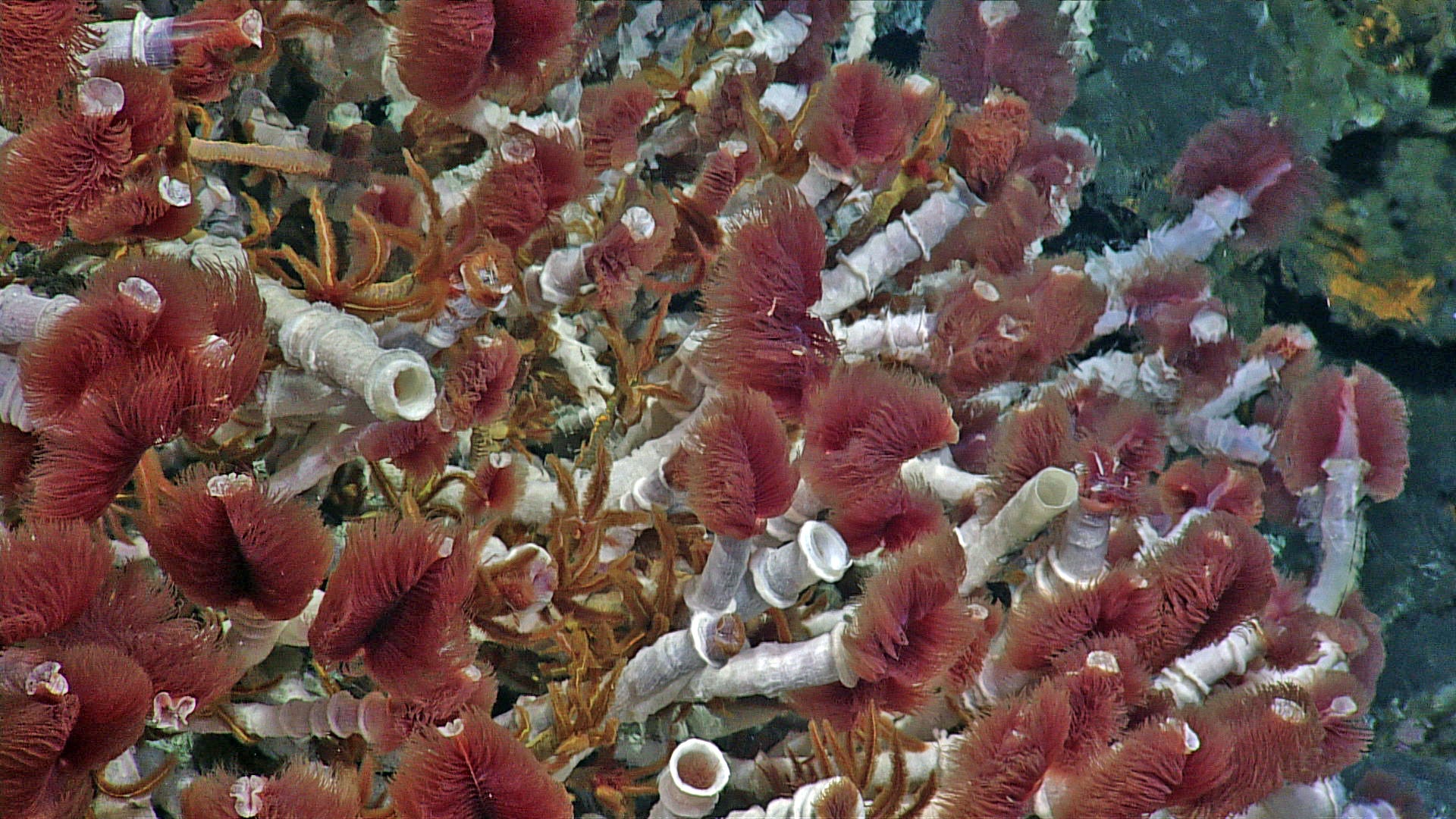
My Enigma Machine:
Ultimately, I’ve decided to share a bullet point list of some of the things I think about as I read other people’s writing to learn. Will this be how you do it? Probably not. But perhaps looking at these schematics will help you when you’re building your own from scratch.
I use exemplars of style
I’m not trying to study books that are exactly like what I’m trying to do—in an ideal world, I’m writing something so specifically Stiefvater-y that truly similar titles simply don’t exist. ‘A Stiefvater novel’ is the product of thousands of disparate influences and priorities.
So instead, I look for exemplars. I want a book that is doing this one particular thing really, really well. Really, really loudly. I don’t care if it is stuffing everything else. I can hate 90% of a novel and still get something from the 10% it is teaching me. The more pronounced that 10% is, the more likely I am to be able to identify how that moving part works.
It means I read a lot of things I don’t love when I’m in pursuit of a literary goal. I read lots of things outside my quote-unquote comfort zone (do I even know what that is anymore)? I read outside my genre, outside my decade, outside my subject interests. Outside of fiction, even.
Example: specificity of character is more usually found in literary fiction than in genre, because literary fiction has more room and demand for deep, raw observation. Even though I know I won’t be able to deploy it exactly the same way in a genre project, I study it in its purest form (example: I just finished Natalia Ginzberg’s FAMILY LEXICON, and loved it. Very deep characterization; method impossible to use in genre fiction without modification.
Another example: there’s a certain sort of wry, dry phrasing that I adore, but it’s not in fashion in current fiction. I can study how it works by reading certain authors from the 30s-50s . . . even when they are writing nonfiction essays. Perhaps especially when they are writing nonfiction essays, since the tool itself stands out, unvarnished.
I interrogate my feelings
I have to experience my teaching text as a reader first, a writer second. I need to feel the feels; I need to take it on as the writer intended. This is because I’m studying feelings. When a passage or a character moment or a turn of the phrase delights me, I ask “why did that delight me?” If it makes me fearful, tense, bored, etcetera—I need to have the feeling first. Then I ask myself how it was done.
I look for the deployment of method before its effects
That feeling? Probably was generated long before the passage I notice it in. I know better than to analyze a sad scene on its own. I work backwards; the scene is probably not sad because of the writing inside it. The sadness is likely an effective and cumulative finish to multiple pieces of work done earlier in the novel. Those are the tools I’m looking for. This is true even for humor. Writers teach their readers the “rules” of their books as they go, and a punchline that makes you laugh is often the product of repetition or set up that happened multiple times before.
I outline the structure/ plot reveals/ character mentions
Novels frequently trick readers; a novel is an emotionally manipulative contract with them, after all. That’s what it means to experience a novel as a reader. After that, though, I have to take it on as a writer. That means doing whatever it takes to see clearly and remove my biases. Often, I get a lot of value from outlining someone else’s work scene by scene, very specifically identifying what I am trying to track. I will outline plot events, but more often, I’ll outline act shape, plot twists, how much space an antagonist actually takes up, where information about a certain plot thread is delivered, when the mood is lightened, when puzzles are solved. This goes hand in hand with looking for the first deployment of the method.
I try to learn the most basic rules of a style or method
This is harder to explain—I used to always say “solve for x,” which I know now is not clear. Is this better: What is the simplest possible rule for how an element is deployed? If you learn a method at the most surface level, you’re just a mimic. Have you ever read novels like this? You sort of wince a little and say, oh, they clearly love So-and-So. It’s too close. The author hasn’t incorporated the lessons deeply enough to create their own style. We don’t want that. Not just because we don’t want snobby readers wincing while reading our novels, but also, because we want to become the most specific, exciting versions of ourselves. That means I want to figure out how something works on the deepest possible level, the fewest rules that explain the most manifestations. I’m far more likely to be able to plug that into the equation of my own writing.
Here are examples of “rules” that suggest style: length (of words, sentence, paragraph, chapter, part, project), language (literal, flowery, direct, obtuse, funny, pragmatic), what is omitted (do we look at only gritty things? do we look away from ugly things? do we avoid action? do we avoid introspect?), what is included (do we see side characters, do we see visuals, do we delve into much that is not directly plot-related), how often is it used (it=humor, dialog, sex, death, description, repetition, quips, violence, puzzles, frustration), how much “buy in” from the reader is required (is the structure or voice or point of view unusual, does it have a very long opening, does it require close reading to get any satisfaction?)
Okay, that’s it for now.
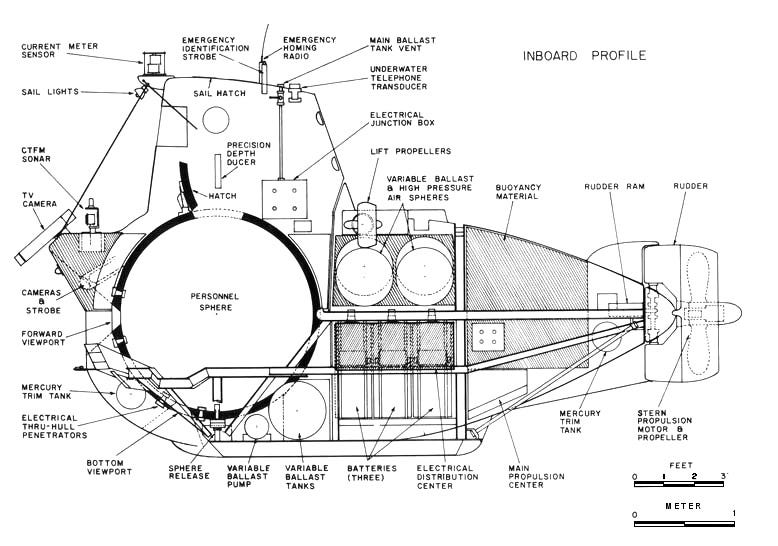
Here’s Robert Ballard’s most famous tool, Alvin.
.jpg)
Use that as you will. Writing is a one-man submarine.
Extras:
• I’m listening: “Lanterns Lit,” by Son Lux. “Side On,” by Ebbb. “Glimmer,” by Temples. “Tremolo,” by Young Fathers. “Daydream Unbeliever,” Shearwater; “To the Hills,” LAUREL, “Turn Down the Bed,” by Brittany Haas and Natalie Haas.
• I’m reading: I just finished an anthology of Roald Dahl’s short stories and Natalia Ginzberg’s FAMILY LEXICON (I really liked them both; eventually I will update my Goodreads.)
• I’m watching: while I was jetlagging after my Poland trip, Lover and I rewatched Spy Game in painstaking brief installments until I fell asleep on the couch.
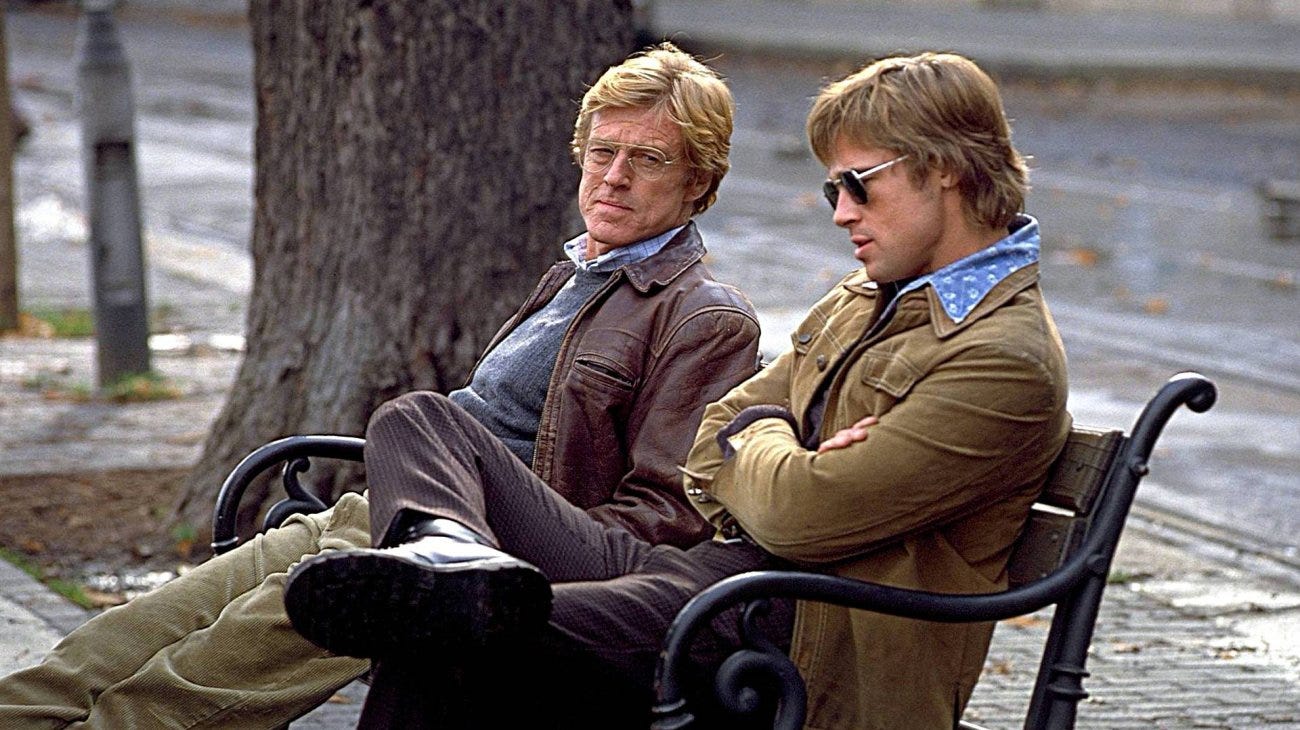
I’m doing: a year ago, I said I was committing to a year of blogging, doing a post at least each weekend. That year’s up, and folks have asked if what my verdict is. It’s this: I’m gonna keep going, but I’m not going to lasso myself to that weekend schedule the same as before. We’ll see how the next twelve months goes.
Perhaps a strange takeaway, but thank you for reminding me that red tube worms exist. I’d completely forgotten about a book my grandmother gave me as a very small girl that had pictures and descriptions of all kinds of strange deep-water creatures, and that page was my favorite. I remember it so vividly. She passed when I was five years old, and the book disappeared some years later, but that photo brought it back.
How frustrating would it have been if you had only thought about the tree falling down but didn’t vocalize it?? This way your powers are on record. (Even if the prediction window is extremely short, it’s still enough time to jump out of the way of a tree, which is really all you need! For trees. Maybe not for tornadoes.)
Happy to hear the crumbs will still be coming, even if it’s more occasional. Would hate to lose this lovely, human corner of the internet.